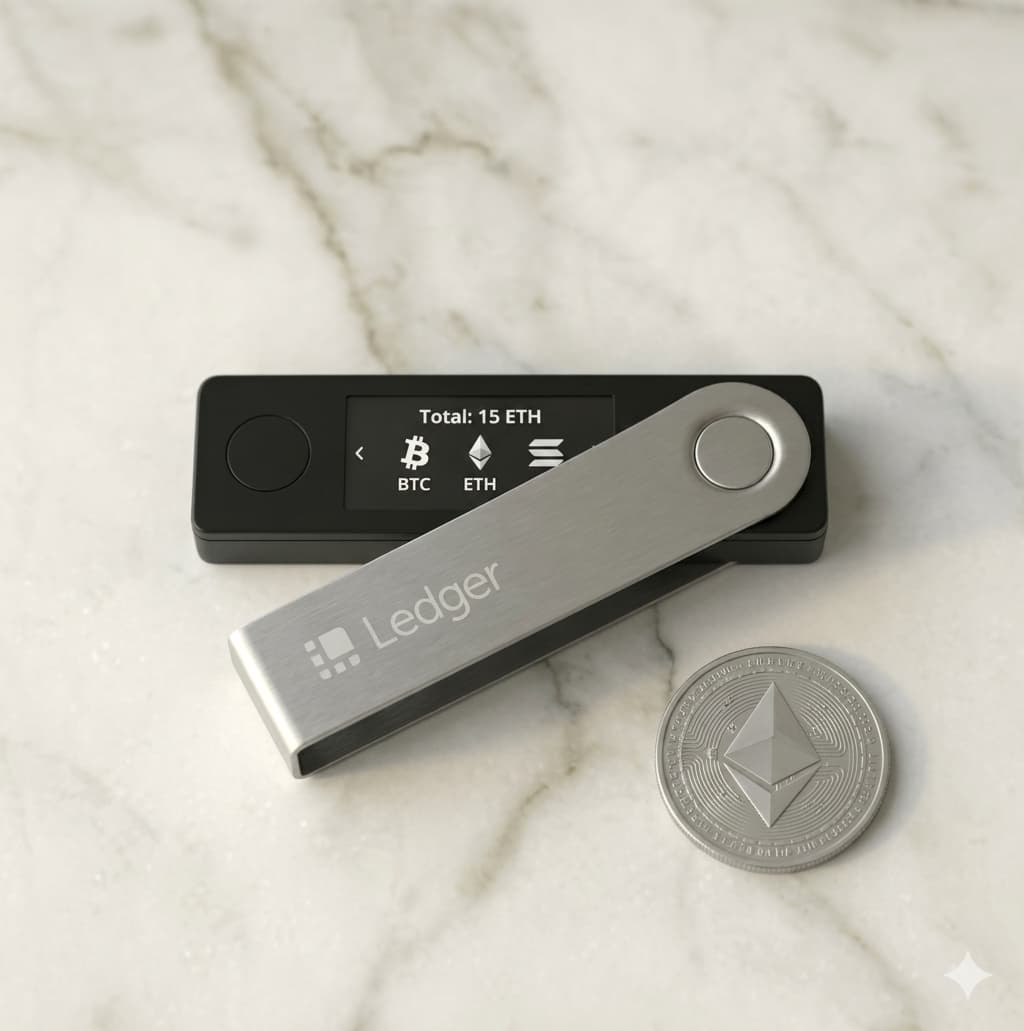
G-Tax Consulting advises private crypto investors, active traders and Web3 startups on the taxation of cryptocurrencies – Bitcoin, altcoins, staking, DeFi, NFTs and token launches – from Hamburg, digitally and multilingually in German, English, Russian and Italian. We work with the leading crypto tax tools.
Cryptocurrencies are no longer a tax grey area: the tax authorities exchange data with platforms, the case law of the Federal Fiscal Court is becoming more concrete, and the Ministry of Finance letters of 2022 and 2025 have clarified many questions. We advise private investors, active traders and Web3 startups.
For private investors, § 23 EStG applies: sales within one year are taxable, tax-free thereafter. The exemption limit has been €1,000 per year since 2024 — and it is treacherous: at €1,001 of gain, everything is taxable. Exchanging one cryptocurrency for another counts as a sale plus purchase and restarts the holding period. A wallet-based approach applies: for the holding period, FiFo (first in, first out) is assumed; for valuation, the Ministry of Finance provides for the average method, though FiFo is permitted as a simplification.
The one-year holding period is under political debate. In the course of budget consolidation, a changed crypto taxation is being discussed as a possible revenue component, and a draft law was expected in 2026. Nothing has been decided so far: until a legally effective change, the one-year period continues to apply unchanged. We follow the development and continually align the advice with the current legal position.
For passive pool or platform staking as well as lending, the returns generally count as other income (§ 22 No. 3 EStG) and are taxed at market value at the time of receipt; the subsequent holding period of the coins received is one year, not ten. Since the 2025 Ministry of Finance letter, the time of receipt can be set at the moment of claiming, and at the latest applies at the end of the calendar year. Active block creation (forging), by contrast — like mining — can lead to commercial income where there is scale and a profit intention. With liquidity pools, each step — deposit, reward, exit — must be assessed separately.
NFTs are treated as separate assets; for private speculation § 23 EStG applies analogously, for creators usually §§ 18 or 15 EStG. Web3 startups bring their own topics: the accounting valuation of token holdings, token launches, founder vesting, DAO structures. We know the relevant case law and integrate crypto software such as CoinTracking, Blockpit or Koinly into the bookkeeping.
When moving abroad, the respective crypto rules apply — Portugal, for instance, where gains for private investors generally remain tax-free after at least one year. The exit tax (§ 6 AStG) captures crypto only where it is held through a GmbH. Anyone who has declared nothing for years can regularise through a voluntary disclosure with exemption from prosecution (§ 371 AO) — here we coordinate with specialist tax criminal lawyers.
G-Tax Consulting advises on the taxation of cryptocurrencies – from Bitcoin and Ethereum through DeFi and staking to NFTs. We classify transactions on a sound legal basis, prepare data from common tracking tools and file the tax return. Fully digital and, on request, in German, English, Russian or Italian.
Gains from a sale of private assets are tax-free where more than one year lies between acquisition and disposal. Within the period, an exemption limit for private disposal transactions applies (since 2024: €1,000 per year). For staking, lending or commercial trading, different rules apply, which we review individually.
Returns from passive staking and lending generally count as other income (§ 22 No. 3 EStG) and must be recorded at market value at the time of receipt. For currency tokens such as Bitcoin and Ether, the holding period of the coins received remains one year; the Ministry of Finance letter of 6 March 2025 ruled out a ten-year period for these tokens. A subsequent disposal can additionally trigger a private disposal transaction.
We integrate the output of the leading tools – CoinTracking, Blockpit and Koinly – into the tax return, instead of capturing thousands of transactions by hand.
Externally listed: G-Tax Consulting is featured in the Koinly directory of crypto tax accountants as a firm specialising in cryptocurrency taxation.
In a free initial consultation, we clarify which structure best fits your situation.
Request an initial consultation